

After the cast is removed
Activities to encourage
Key points
After the cast is removed
 After several weeks/months in a hip spica cast the child’s joint will be quite stiff and they can be wary to move them.
This is completely normal and will improve with time. Encourage your child to move their legs as much as they can with lots of reassurance. Giving your child plenty of time is key.
Warm baths will help with the discomfort and encourage the child to start moving their legs again. Try some of the following gentle movements with your child to help get their legs moving:
• Bending and straightening the knees
• Bringing their knees up to their chest
• Bringing their legs apart and then together
They will slowly begin to regain their range of movement in time. Do not force any movements that the child is unhappy with.
After coming out of the cast, you might find that the child reverts back to previous developmental milestones, such as crawling or bottom shuffling, again this is completely normal. They will start to pull themselves up using furniture in their own time and continue to progress their mobility.
Older children who were walking prior to the spica application may find that when they do start taking steps they initially walk with a wider stance and/or limp. This will also improve
by encouraging normal activities and lots of play in different positions.
Activities to encourage
 The best way to encourage range of movement, weight bearing, standing and walking is through play. Play is a great distraction tool to make these activities fun, enjoyable and less scary.
As well as encouraging gentle range of movement at the joints, you can get them used to putting some weight and pressure through their legs again. After being in a cast for a long period it is often a strange and unnerving sensation for the child.
You can encourage weight bearing through the legs by sitting on the floor with the child in your lap or on a small bench. Encourage the child to place both feet flat on the floor and reach over their legs for toys as this will help them start taking weight through their legs.
You can also use some sensory play with a tray of water or foam to splash in at their feet.
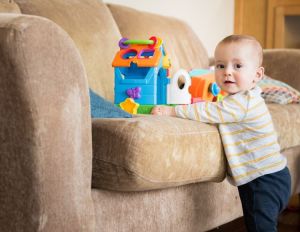
Once the child is showing signs of wanting to pull up to stand you can start to encourage sit to stand, standing play, cruising side to side (for example along the sofa) and assisted walking in their play. Allow these activities to be guided by the child.
Key points
- Encourage gentle movements of the legs once the cast is removed.
- It will take time for the child to walk with a normal pattern once the cast is removed.
- Don’t pressurise the child, go at the child’s own pace.
- Encourage all activities through play. Make it fun!