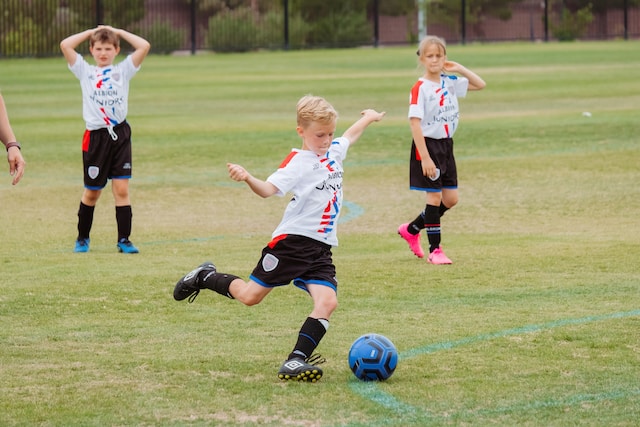
Unlike adults, children’s bones, muscles and tendons are growing which can make them more prone to injury.
Some childhood injuries to muscles, bones and soft tissues are preventable.
The following tips aim to reduce the risk:
Ensure sufficient and regular warm-ups and cool-downs before exercise and sport
Power Up to Play is an initiative created by medical professionals who have developed simple, evidence-based warm-ups to reduce risk of preventable knee injuries in youth sports.
Exercises should be performed correctly and ideally it should be performed as a warm-up 2-3 times a week.
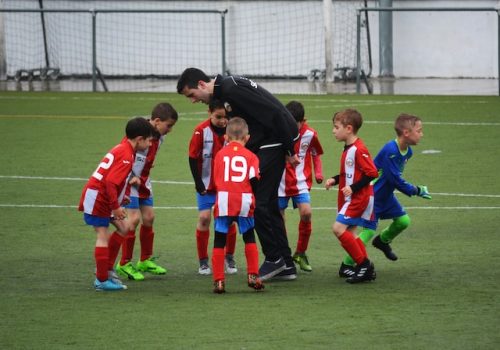
Ensure activities are carried out with appropriate levels of supervision and coaching
Proper skills and technique should be taught by a trained fitness professional to prevent injury. Strength and Conditioning type training can be beneficial, especially for football and high impact sports like rugby, as long as supervised and appropriately programmed.
More information about the prevention of injuries and treatment following injury can be found in the pages below:
Ifyouhaveanyconcernsorqueriesabout this informationplease contact Dolphin Outpatients on 02921 847577.
If you do not have an appointment arranged with physiotherapy and symptoms continue or are not improving gradually, then the parent or legal guardian can self-refer their child to Paediatric Physiotherapy Outpatient Department by telephoning the our referral line on 02921 836908.
Activities should be appropriate to the child’s age and level of development
Use the child’s age as a guide for training hours per week – they should spend fewer hours per week than their age in participating in organised sport
Ensure sufficient rest and recovery
To allow for physical and psychological recovery, The American Academy of Paediatrics recommends rest from competitive athletics, sport-specific training, and practice by:
taking at least 1 to 2 days off per week
taking 1 month off from a sport at least 2 times a year.
Nutrition and hydration
Adequate nutritional and hydration intake is also necessary – nutritional requirements vary during the growing years and should be adequate for normal growth and match the energy and nutritional requirements needed for physical activity levels.
Ensure children stay hydrated with water or non-sugar containing sports drinks, especially in the summer months.
Ensure activity variety
Engaging in a variety of activities and sports is important in decreasing risk of overuse injury, but also stress and burnout and can also improve general physical fitness and development of motor skills, and increase motivation and exercise participation
Ensure enough sleep
Sufficient sleep is essential for rest and recovery, where poor sleep has been strongly associated with increased frequency of injuries in the athlete population. Optimal hours will depend on age, but between 8-12 hours will be necessary. It is important to promote good sleep hygiene:
limit caffeine intake, and avoid any caffeine after lunchtime
avoid large meals before bed
have a set bedtime routine and bed time, including time to wind down (e.g. bath/shower time or reading)
avoid screen time at least one hour before bed
Returning to sport after injury
Concussion
A concussion is a brain injury caused by a direct blow to the head, or other parts of the body causing rapid movement of the head.
Following minor injuries, such as strains and sprains, phase back a gradual return to sport once range of movement, strength and function returns. This will prevent further injury and allow healing to occur.
More information about the prevention of injuries and treatment following injury can be found in the pages below:
Ifyouhaveanyconcernsorqueriesabout this informationplease contact Dolphin Outpatients on 02921 847577.
If you do not have an appointment arranged with physiotherapy and symptoms continue or are not improving gradually, then the parent or legal guardian can self-refer their child to Paediatric Physiotherapy Outpatient Department by telephoning the our referral line on 02921 836908.
This website uses cookies to improve your experience. We'll assume you're ok with this, but you can opt-out if you wish. Read MoreCookie settingsACCEPT
Privacy & Cookies Policy
Privacy Overview
This website uses cookies to improve your experience while you navigate through the website. Out of these cookies, the cookies that are categorized as necessary are stored on your browser as they are essential for the working of basic functionalities of the website. We also use third-party cookies that help us analyze and understand how you use this website. These cookies will be stored in your browser only with your consent. You also have the option to opt-out of these cookies. But opting out of some of these cookies may have an effect on your browsing experience.
Necessary cookies are absolutely essential for the website to function properly. This category only includes cookies that ensures basic functionalities and security features of the website. These cookies do not store any personal information.
Any cookies that may not be particularly necessary for the website to function and is used specifically to collect user personal data via analytics, ads, other embedded contents are termed as non-necessary cookies. It is mandatory to procure user consent prior to running these cookies on your website.
Help us improve Keeping Me Well!
We’re currently working to improve the Keeping Me Well website. If you’d like to help us make this site a better, more helpful experience for you, please take a few minutes to let us know what improvements you’d like to see.